
Quick verdict
Start free, pay for retained history, and avoid buying paid-acquisition or enterprise modules before the app has a repeatable ASO cadence.
Indie developer buying guide
For most indie iOS developers, the best ASO tool is the smallest product that can check target keywords, retain ranking changes and identify metadata opportunities without enterprise overhead. AppStoreStatistics is the focused value recommendation; App Radar can suit a more guided ASO process, while broader suites make sense after team, market and reporting complexity grows.
Shortlist
5
products mapped to a specific workflow, not ranked by paid placement.
Quick verdict
Start free, pay for retained history, and avoid buying paid-acquisition or enterprise modules before the app has a repeatable ASO cadence.
Commercial disclosure
AppStoreStatistics is included in this guide and sold by the publisher. Competitors were researched from official public materials; no paid placement, private account test, rating, or affiliate ranking is presented.
Selection methodology
01
The ranking favors workflow fit and predictable cost for a solo or very small team.
02
Enterprise support, breadth and procurement are not treated as automatic advantages for an indie user.
03
All competitor descriptions use official public materials; no private trial is implied.
| Criterion | Why it matters | How to evaluate it |
|---|---|---|
| Primary workflow | A broad feature list is poor value when the recurring job is narrow. | Match the product to rankings, keyword research, owned analytics, review operations, paid acquisition, or data infrastructure. |
| Data type | Observed public signals, modeled estimates, and exact first-party metrics answer different questions. | Reject any comparison that presents competitor downloads, revenue, conversion, or keyword volume as official Apple facts. |
| Store and country coverage | ASO and chart results are storefront-specific. | Test the exact countries, categories, apps, and keywords used by the team rather than relying on a global coverage headline. |
| History and exports | A tracker becomes valuable when it retains the history needed for decisions. | Confirm retention, export format, API rights, report limits, and what happens after cancellation. |
| Total operating cost | Software price excludes onboarding, analyst time, engineering, and unused modules. | Compare the full annual workflow cost, not only the smallest price displayed on a pricing page. |
Recommendations by use case
Pre-launch keyword validation
Free metadata and rank tools lead into focused paid tracking.
Guided optimization workflow
Its product positioning emphasizes a structured ASO process and services.
Owned analytics plus monitoring
Connected analytics can justify the broader operating platform.
Documented product profiles
AppStoreStatistics is a self-serve iOS research suite for public app entities, country and category charts, keyword ranks, difficulty, suggestions, profiles, gaps, competitors, releases, ratings, original reports, and an evidence-driven ASO AI Agent. It is designed for decisions that can be supported by observed App Store signals without requiring an enterprise data contract.
The product can be evaluated through public charts, reports, methodology, API documentation, and free tools before a paid plan is selected. Exact first-party metrics require an authorized owned-app connection; estimates are not presented as exact competitor data.
Best for: Indie developers, founders, small ASO teams, and researchers who need focused iOS workflows with transparent pricing.
Pricing context: EUR 7.99 monthly, EUR 49.99 yearly after an eligible seven-day trial, or EUR 99.99 lifetime. Free public tools include a rank checker and metadata analyzer.
Official source: AppStoreStatistics ASO tools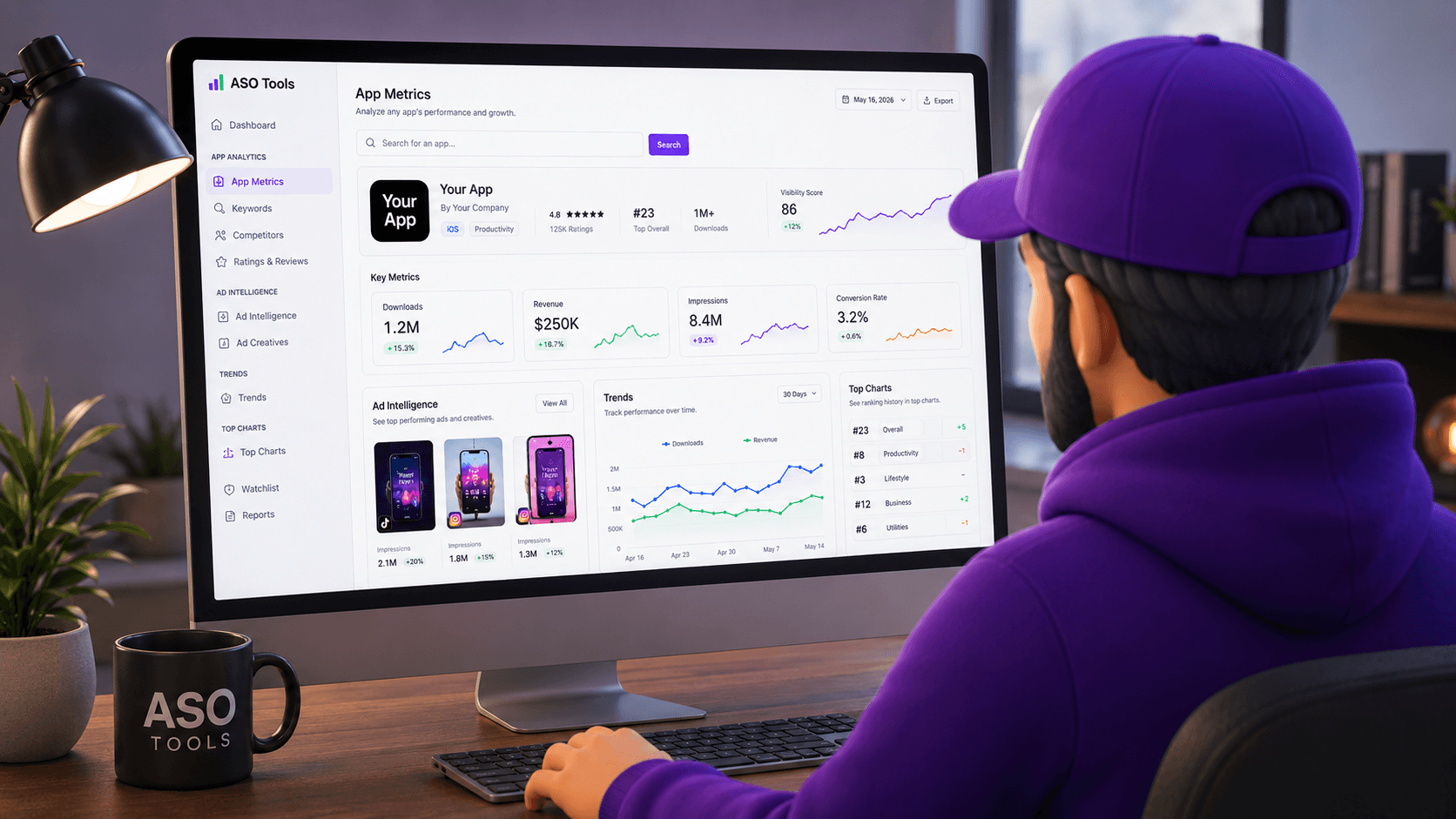
App Radar provides keyword tracking, metadata optimization, competitor research, localization, reporting, and managed ASO services. It is oriented toward teams that want a guided optimization process rather than only raw public ranking observations.
Official App Radar product and service pages provide the scope. This guide does not claim a private account trial or a benchmark of ranking accuracy.
Best for: Developers and marketing teams wanting guided ASO workflows, localization support, and optional managed services.
Pricing context: Public product and service offers can change; verify the current plan, app, keyword, and market limits directly.
Official source: App Radar ASO platform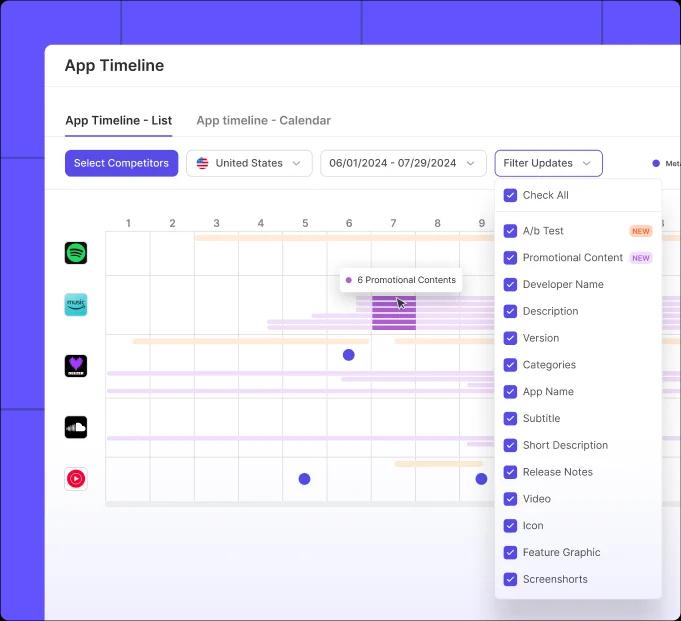
Appfigures combines connected owned-app analytics, monitoring, ASO, Apple Ads, competitor intelligence, and market research. Its main distinction from a public research tool is the ability to place owned performance and operational monitoring inside the same platform.
The assessment uses Appfigures' public platform and pricing pages. No private workspace, connected app, export, or historical data accuracy test was performed.
Best for: Teams that want owned-app analytics and monitoring alongside ASO and public app intelligence.
Pricing context: Plan-based public pricing is available, but features and limits vary by tier and should be checked on the current official pricing page.
Official source: Appfigures platform
AppTweak is an app-store marketing platform for ASO Intelligence, Apple Ads, reviews, market intelligence, reporting, APIs, creative analysis, and enterprise workflows. Its advantage is depth and operational breadth for teams running structured ASO programs across many markets.
The guide relies on current official ASO, pricing, enterprise, and AI-agent pages. It is a documented comparison, not a hands-on test of a private AppTweak account.
Best for: Dedicated ASO teams, agencies, and larger publishers that need localization, reporting, Apple Ads, and extensive keyword workflows.
Pricing context: Public plan pricing exists for selected products; enterprise, reporting, and API requirements can involve separate scope. Confirm current billing and limits directly.
Official source: AppTweak ASO tools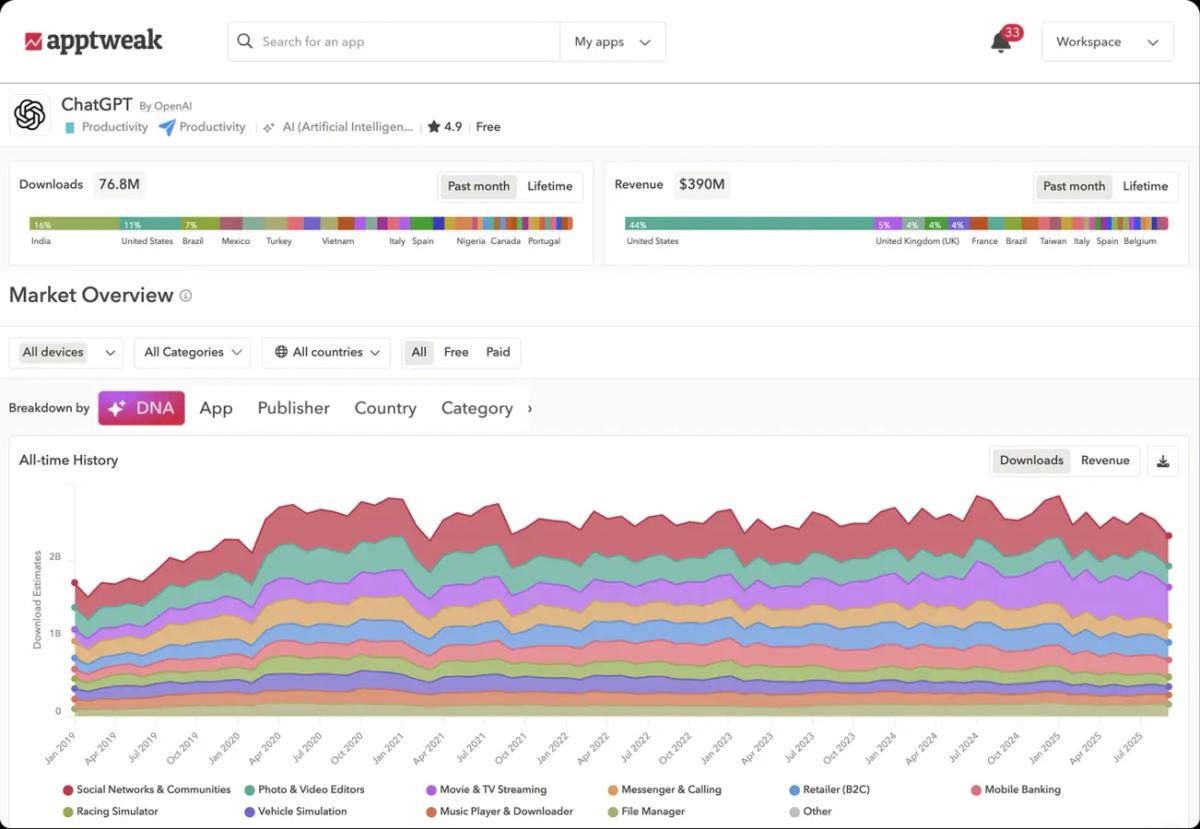
ASOdesk combines keyword intelligence, metadata optimization, app monitoring, review workflows, organic-reporting tools, and agency services. It can fit teams that want a larger operational ASO toolkit and review features in one environment.
The guide is based on ASOdesk's official English-language product materials and documentation links available at the review date.
Best for: ASO specialists and agencies needing keyword operations, review workflows, and reporting.
Pricing context: Pricing and current product availability should be confirmed on the official site; no unverified plan amount is quoted here.
Official source: ASOdesk platform
An indie developer typically switches between product, support, acquisition and release work. The best tool shortens a decision without requiring a dedicated analyst to maintain it.
Prioritize a repeatable weekly loop: inspect ranking movement, review metadata, compare a few direct competitors and record the next change. Avoid paying for modules that create another dashboard to administer.
Begin with one storefront and a narrow keyword set. Add countries only when the app is localized and the market matters. Add competitor depth when a product decision depends on it, not because the tool permits more rows.
A low-cost focused suite can remain sufficient for a profitable niche app. Enterprise software is not a maturity milestone; it is justified only by workflows, data rights and collaboration requirements.
Select one metadata or positioning hypothesis, define the target storefront and record the pre-release keyword and chart baseline. Keep unrelated changes small enough that the result remains interpretable. After release, observe the same series and annotate delays or missing snapshots.
Use qualitative evidence alongside movement: search-result relevance, visible competitor positioning, rating changes and release timing can explain why a numerical shift deserves attention. An indie workflow should produce one clear next action, not a report that requires another meeting to decode.
Set a monthly software ceiling and revisit it only when a tool replaces manual work or unlocks a roadmap decision. Include the time spent maintaining keyword lists and reports. A focused product used every week can create more operational value than a comprehensive suite opened only before launch.
Archive one short monthly decision record so the developer can see which observations actually changed metadata, localization, release timing or positioning rather than measuring tool usage as an outcome.
Evaluate the focused workflow
Check one App Store keyword for free, inspect the methodology, or compare current Monthly, Yearly, Lifetime and Enterprise options.
Track a small set of relevant keywords, category position, ratings, metadata changes and direct competitors in the primary storefront.
Spend according to the decisions and time saved, not a fixed benchmark. Start with free checks and validate a paid workflow before committing.
No. It is focused rather than beginner-only and supports rankings, keyword research, competitors, reports and evidence-driven AI assistance.
Not automatically. Begin with the countries the app can support and expand when local demand and operations justify it.
AI can organize evidence and actions, but recommendations still require observed ranking, metadata and storefront data.
Choose based on expected product lifetime and terms. Lifetime is access for the operating life of the offered product, not a guarantee of unchanged features.
Product scope comes from the official sources linked in each profile and was reviewed on August 22, 2026. Capabilities, limits and prices can change. Competitor names are trademarks of their owners; this independent documented comparison is not sponsored by them.