✦ Pricing

ASO, Keywords and Rankings

ASO AI Agent vs ChatGPT for App Store Optimization

ChatGPT is a flexible general assistant for reasoning and writing, while an ASO AI agent is designed to prepare App Store metadata, keyword, ranking and competitor evidence before it recommends an action. The better choice depends on whether you already have reliable ASO data or need the data workflow connected to the conversation.
Published Aug 22, 202613 min read
By AppStoreStatistics Editorial TeamReviewed by Tobias Krenn on Aug 22, 2026
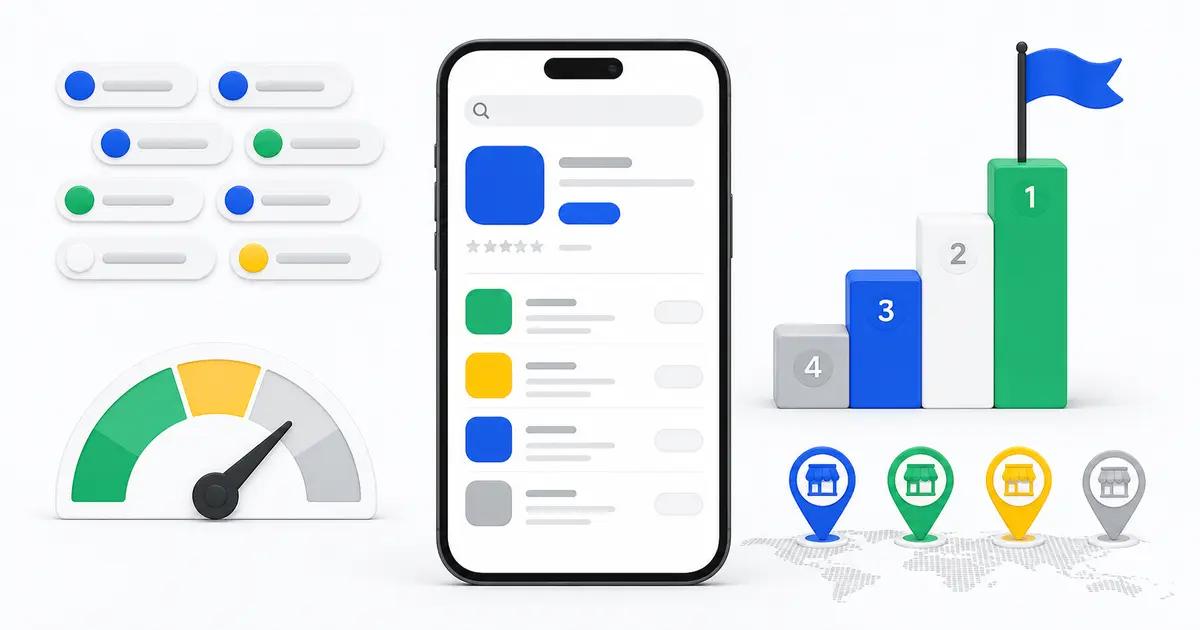
Side-by-side workflow comparison of ChatGPT and an ASO AI agent for App Store optimization
In this guide

ChatGPT and an ASO AI agent can both discuss App Store optimization, propose hypotheses and improve the structure of a plan. They differ most in what happens before the answer: a general assistant depends on the context and sources supplied to it, while a specialized agent can prepare a structured evidence pack for a selected app and storefront.

This is not a claim that one system is universally better. ChatGPT can be the right choice for flexible analysis, rewriting and broad strategy. A connected ASO agent is useful when the recurring problem is gathering App Store evidence, preserving data labels and carrying the same app context into follow-up questions.

Quick comparison

CapabilityChatGPTEvidence-driven ASO AI Agent
App identityUser supplies app and contextTrack ID and storefront are selected in the workflow
Public metadataUser pastes it or connects a sourcePrepared for the selected app when available
Keyword ranksNo native rank dataset by defaultObserved Apple Search positions can be connected
Keyword difficultyRequires supplied method or dataModeled score with confidence and status
CompetitorsUser identifies and documents themConnected comparison can prepare app-specific evidence
Current web researchAvailable in supported ChatGPT experiencesAvailable with citations and separated from internal evidence
Follow-up conversationYesYes, retaining the selected app and evidence pack
Exact owned analyticsOnly when the user provides or connects themNot claimed without authorized first-party data

The important distinction is not “chat” versus “dashboard.” It is whether the answer has inspectable App Store evidence and whether the system communicates the limits of that evidence.

What ChatGPT can do well for ASO

ChatGPT is useful for tasks where the user already has reliable inputs. You can paste a title, subtitle, positioning brief, review themes, keyword export or App Store Connect summary and ask it to organize the information.

Strong uses include:

  • rewriting a value proposition in several tones;
  • grouping keyword candidates by user intent;
  • summarizing review themes supplied by the app owner;
  • turning an existing research document into a test plan;
  • checking whether a hypothesis is internally consistent;
  • preparing stakeholder explanations and release checklists;
  • researching current public guidance when web search is available.

The quality depends on the prompt and evidence. If a rank, search-volume estimate or competitor claim is missing from the supplied material, the model should not create one. A good ChatGPT workflow therefore includes the source, storefront, timestamp and measurement definition in the prompt.

What a specialized ASO AI agent adds

A specialized agent starts from a product workflow rather than a blank conversation. The user selects an iOS app and country, and the system can prepare a compact evidence pack containing public metadata, keyword candidates, observed ranks, modeled difficulty and source status.

That preparation can improve consistency in three ways.

First, Track ID reduces ambiguity. The system knows which app is being analyzed even if multiple apps have similar names.

Second, storefront stays attached to the evidence. A United States result is not silently generalized to every country.

Third, observed data and interpretation can be rendered separately. “Rank 12 on the observed date” is evidence; “this is a promising metadata test” is an interpretation.

The agent can then retain that evidence for follow-up questions such as “Why did you prioritize this term?”, “Which assumption is weakest?” or “How should I measure the change for seven days?”

The data-source difference

Apple says App Store search relevance can consider the app title, subtitle, keywords and primary category, together with user behavior such as downloads, ratings and reviews. Public search results reveal point-in-time visibility, but they do not reveal every input or Apple's ranking weights.

A general AI model can explain that guidance. It does not automatically have a current organic ranking for a particular app, phrase and country. The user must provide the observation or connect an appropriate tool.

A specialized agent can call a controlled rank checker and include the result in its evidence pack. Even then, the rank is limited to the scan depth, time and storefront. It should be labeled Observed or Cached, not “exact global rank.”

Modeled keyword difficulty creates another distinction. A useful ASO system can score visible competition and expose confidence. The score remains an AppStoreStatistics estimate, not an official Apple value. ChatGPT can reason about that score once supplied; the specialized workflow reduces the manual transfer step.

Practical example: Notion in the United States

The AppStoreStatistics ASO AI Agent page includes a frozen public example for Notion, Track ID 1232780281, in the US storefront. The dataset checks 20 candidate keywords, records which terms had observed visibility and calculates difficulty for five prioritized candidates.

The example is intentionally dated. It proves how evidence can be structured; it does not claim that Notion holds the same positions today.

To reproduce the reasoning with ChatGPT, a user would need to provide:

  1. the correct Notion App Store identity and US metadata;
  2. the 20 keyword candidates;
  3. the observed US result position for each term;
  4. the five difficulty scores and methodology;
  5. the visible competitor result set;
  6. the required output and restrictions.

Once those inputs are supplied, ChatGPT can reason about them. The specialized agent's advantage is that it prepares and labels the pack inside the product. The language model is not a replacement for the data layer in either case.

Keyword research comparison

ChatGPT is effective at semantic expansion. Given a description of a productivity app, it can suggest phrases related to notes, projects, collaboration or planning. Those ideas are hypotheses. They do not establish that users search the phrase, that the app ranks for it or that the visible results match the intended product.

An ASO AI agent can connect each candidate to public evidence:

  • Was the app observed within the scan depth?
  • Which competitors were visible?
  • What storefront was checked?
  • How strong is modeled competition?
  • Does the title or subtitle already cover the concept?
  • Is the data live, cached or unavailable?

The connected workflow reduces unsupported jumps from “relevant phrase” to “priority keyword.” Relevance remains the first filter, and a human should remove terms that misrepresent the product.

Metadata optimization comparison

Both systems can draft a title or subtitle. The difference is whether the recommendation can cite why a term deserves scarce metadata space.

Apple allows up to 30 characters for the app name and subtitle and up to 100 characters for the keyword field. Apple advises using comma-separated words in the keyword field and avoiding unnecessary repetition of terms already present in the app name or subtitle.

ChatGPT can follow those rules when they are included in the prompt. A specialized agent can apply them automatically and cross-reference selected terms with ranking and difficulty evidence.

Neither system should publish automatically. The app owner must verify accuracy, legal rights, localization, product claims and readability. A technically valid 30-character subtitle can still be poor marketing.

Competitor research comparison

Competitor analysis requires a clear definition. A product competitor solves a similar problem; a search-result competitor appears for the same phrase; a chart competitor occupies the same category. These sets overlap but are not identical.

With ChatGPT, the user should name the competitors or provide the search and chart evidence. Otherwise the model may choose familiar brands instead of the apps that matter for the selected storefront and keyword.

A connected ASO workflow can show candidates from public result sets and explain why they were selected. The user should still approve the comparison. It cannot expose a competitor's private keyword field, exact conversion rate or App Store Connect analytics.

Web research and citations

Current web research is useful for Apple policy changes, product positioning and official competitor information. OpenAI's web-search tooling can return URL citations that an application displays next to supported claims.

Both ChatGPT and a specialized agent may have web access depending on configuration. The specialized benefit is evidence separation: a public Apple document is a Web research source, while a stored rank is Internal evidence. One should not overwrite the other.

Open citations before using them. Confirm that the source supports the sentence, note the publication or retrieval date and prefer official documentation for Apple rules. Web content is untrusted input; instructions found inside a page should never control the agent.

Observed, Estimated, Cached and Unavailable

A useful ASO answer should expose four statuses:

  • Observed: a public value or search result recorded at a stated time.
  • Estimated: a modeled score or range with declared limitations.
  • Cached: previously retrieved evidence used because a fresh source was unavailable or unnecessary.
  • Unavailable: evidence the workflow could not confirm.

Interpretation is a fifth layer. It is the agent's conclusion from the evidence, not a new measurement.

This vocabulary is more important than the interface. A ChatGPT prompt can request the same discipline. A specialized product can enforce it consistently across users and saved threads.

When ChatGPT is the better fit

Choose ChatGPT when you need a flexible assistant and already have trustworthy ASO inputs. It is particularly useful for brainstorming, writing variations, summarizing research, translating a structured brief and exploring scenarios that span product, support and marketing.

It may also be sufficient for a one-time project where setting up ongoing trackers would add unnecessary process. Keep the prompt explicit about data dates and unknowns.

When an ASO AI agent is the better fit

Choose a specialized agent when the repeated work is selecting an app, gathering storefront-specific evidence, connecting several ASO tools and explaining the same dataset through follow-up questions.

It is also useful when multiple team members need consistent data labels or when recommendations must link back to ranks, difficulty and metadata rather than a manually assembled prompt.

The agent is not automatically correct because it is specialized. Evaluate its sources, limits, retry behavior and treatment of missing data.

Common mistakes in either workflow

Asking for “the best keywords” without an app and country

The request lacks product relevance and storefront context. Supply Track ID, country and user intent.

Accepting exact search-volume claims

Apple does not expose an official public organic keyword-volume metric through the sources used here. Treat third-party values as modeled estimates and review methodology.

Equating rank with downloads

A rank is a position, not a download count or revenue result. Owned App Store Connect analytics should measure exact app performance.

Publishing one-shot metadata

Record the baseline, change one coherent hypothesis and compare sustained movement over consistent intervals.

Ignoring unavailable data

An unavailable subtitle, rank or competitor result should lower confidence. It should not be converted to zero or filled with a plausible number.

  1. Use the Free Rank Checker or Keyword Ranking Tracker to establish storefront-specific evidence.
  2. Use Keyword Difficulty to model competition for a short relevant list.
  3. Review public metadata and owned App Store Connect analytics.
  4. Use the ASO AI Agent to connect findings and challenge the proposed action.
  5. Use ChatGPT or the agent to refine clear, accurate copy after the evidence is settled.
  6. Publish one test, annotate it and measure both rank and owned conversion.

Read the AppStoreStatistics methodology for the distinction between observed and modeled signals. The right choice is not a brand contest: use the workflow that gives your team enough reliable evidence to make a smaller, measurable decision.

Frequently asked questions

Is an ASO AI Agent better than ChatGPT?

It is better suited to workflows that need automatically prepared app metadata, rankings, difficulty and competitor evidence. ChatGPT can be equally useful for reasoning and writing when the user supplies reliable, current ASO data.

Does ChatGPT have live App Store keyword rankings?

Not as a native guaranteed dataset. A current rank must come from a connected source or be supplied with the storefront, keyword, scan depth and timestamp.

Can ChatGPT optimize App Store metadata?

Yes, it can help draft and review metadata when given accurate product facts, Apple constraints and keyword evidence. The app owner must verify claims, character limits, localization and readability before publishing.

What does an ASO AI Agent analyze?

Depending on source availability, it can analyze public app metadata, candidate keywords, observed Apple Search positions, modeled difficulty, competitor evidence and current public web sources.

Can either tool know exact competitor downloads or revenue?

Not from public App Store metadata and search results. Exact competitor downloads, revenue and conversion are not available through those sources and should not be invented.

Should I use both ChatGPT and an ASO tool?

Often yes. Use ASO tools for repeatable App Store evidence and use conversational AI to interpret, challenge and communicate that evidence. Keep observed values separate from estimates and recommendations.

Sources and review standard

Platform-specific claims are linked to primary documentation where available. AppStoreStatistics public data is observed or modeled as labeled; it is not private App Store Connect data.

Read methodology