✦ Pricing

ASO, Keywords and Rankings

Best AI for ASO: How to Choose an Agent That Actually Helps

The best AI for ASO is not the system that writes the most metadata. It is the system that connects app-specific keyword, ranking, competitor and metadata evidence to transparent recommendations that a team can verify before publishing.
Published Aug 22, 202613 min read
By AppStoreStatistics Editorial TeamReviewed by Tobias Krenn on Aug 22, 2026
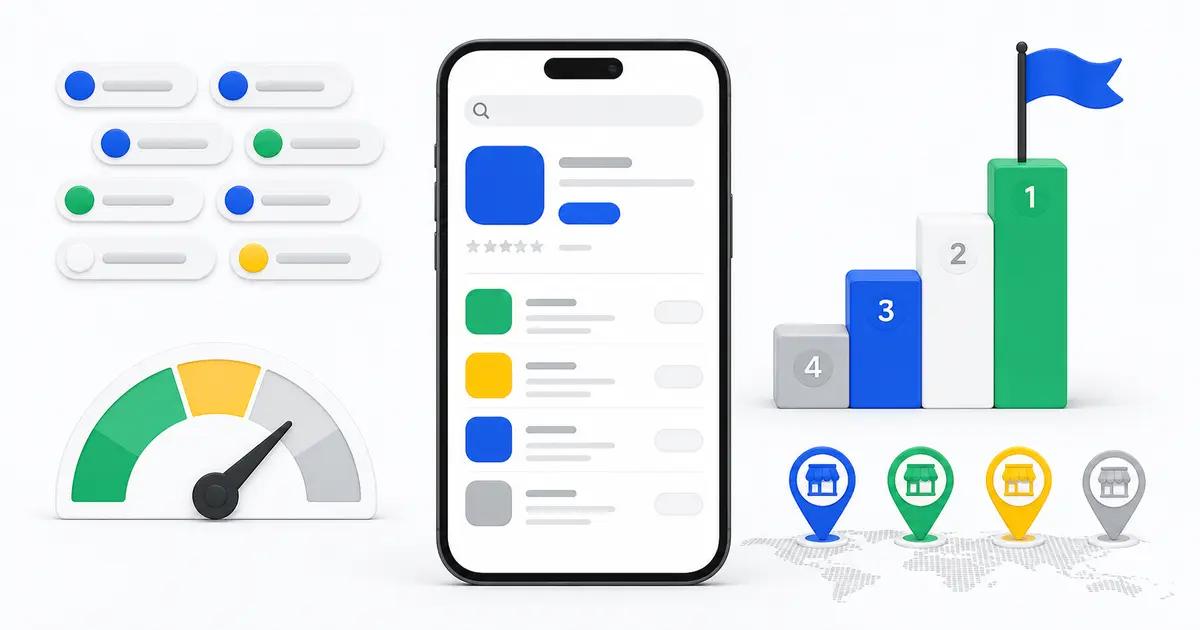
Evaluation framework for choosing an evidence-driven AI tool for App Store optimization
In this guide

Choosing AI for App Store optimization is primarily a data and workflow decision. A polished answer is useful only when you can identify which app, storefront, keyword result, model and timestamp support it.

General AI can help brainstorm positioning, organize research and improve the clarity of a hypothesis. A specialized ASO AI agent can go further by preparing app metadata, observed keyword ranks, modeled difficulty and competitor evidence before it answers. Neither format removes the need for editorial review, App Store Connect measurement or a controlled test.

Start with the decision the AI must improve

Do not begin by comparing feature counts. Write down the recurring ASO decision that currently consumes time or produces inconsistent answers.

Typical decisions include:

  • Which three keywords deserve a ranking check this week?
  • Is weak visibility caused by relevance, competition or missing metadata coverage?
  • Which title or subtitle hypothesis should be tested next?
  • Where does a competitor rank while the selected app is missing?
  • Which findings are observed facts and which are estimates?
  • What should the team do during the seven days after a metadata release?

A useful AI workflow should reduce the effort between evidence and one of those decisions. If the product only generates a large keyword list, it may be a writing assistant rather than an ASO research system.

Seven criteria for choosing the best AI for ASO

CriterionWhat useful implementation looks likeWarning sign
App identityUses the correct Track ID, app, developer and categoryRelies on an app name that could match multiple products
Storefront contextKeeps country attached to ranks and recommendationsDescribes one global App Store result
Ranking evidenceShows observed positions, scan depth and timestampPresents unsourced rank claims
DifficultyLabels the score as modeled and exposes confidenceCalls difficulty an official Apple metric
Metadata contextReviews title, subtitle and keyword-field roles togetherStuffing keywords into visible copy
Competitor evidenceNames the comparison method and selected appsClaims access to private competitor metrics
UncertaintySeparates Observed, Estimated, Cached and UnavailableConverts missing data into precise numbers

These criteria matter because Apple describes search relevance as a combination of textual fields such as the title, subtitle, keyword field and primary category, together with user behavior. A tool should therefore avoid claiming that one keyword edit mechanically controls the result. The correct output is a hypothesis with evidence and a way to measure it.

Evidence should come before generation

An evidence-first ASO workflow has four layers.

Identity layer. It confirms the app and storefront. Track ID is more reliable than a typed app name because names can change or collide.

Observation layer. It gathers public metadata and point-in-time search results. A rank is an observation for one keyword, country and time; it is not a universal app score.

Model layer. It summarizes competition or opportunity. Keyword difficulty can be useful, but it is an estimate derived from visible result strength and other declared inputs. Apple does not publish an official organic keyword-difficulty score.

Interpretation layer. It converts evidence into an action. This is where AI is valuable, but the answer should retain citations, confidence and data gaps.

If these layers are mixed together, a reader cannot tell whether “strong opportunity” means a measured rank, a model output or a language-model opinion.

Practical example: evaluating a keyword recommendation

The public AppStoreStatistics example analyzes Notion, Track ID 1232780281, in the United States storefront. The frozen snapshot checks 20 candidate terms, records public search visibility and models difficulty for five prioritized candidates. It is historical evidence, not a live statement about Notion today.

Suppose an agent recommends testing a phrase. Review the recommendation in this order:

  1. Confirm that the phrase describes a real product capability and user intent.
  2. Check whether the app was observed for that phrase in the intended storefront.
  3. Inspect the visible competitors and whether their products satisfy the same intent.
  4. Review modeled difficulty and its confidence instead of reading the score as exact demand.
  5. Check whether the title or subtitle already uses the important words.
  6. Decide whether the visible metadata or private App Store Connect keyword field is the appropriate test surface.
  7. Save the baseline and change date before publishing.

This sequence prevents a common failure: choosing a phrase because it sounds attractive, then changing several metadata fields without a baseline.

What AI can do well in keyword research

AI is well suited to organizing candidate terms by intent. It can separate brand, feature, problem, audience and workflow phrases, then explain why a candidate fits the app. It can also identify contradictions, such as a high-relevance phrase with no observed visibility or an easy-looking term whose result set reflects the wrong use case.

AI can summarize ranking evidence across a short list and ask useful follow-up questions. For example, if the selected app is already in the top ten for a phrase, the next action may be defending conversion rather than replacing the metadata. If the app is absent while several direct competitors appear, the agent can flag a gap for manual validation.

What AI cannot infer from public search results is exact search volume. It also cannot see a competitor's private keyword field, product-page conversion or App Store Connect acquisition metrics. Those limits should appear in the answer, not only in a legal footer.

Metadata recommendations need Apple-specific constraints

Apple's public guidance gives the app name and subtitle up to 30 characters each and the keyword field up to 100 characters. The keyword field uses comma-separated terms, and Apple recommends avoiding unnecessary repetition of words already used in the app name or subtitle.

An ASO AI assistant should know those constraints, but compliance is only the starting point. A good recommendation preserves brand clarity and truthful product meaning. It should not turn a readable subtitle into a list of disconnected keywords.

Localization also matters. A phrase that fits the United States storefront may not be appropriate in Germany, Japan or Brazil. The agent should keep storefront scope attached to the recommendation and avoid treating translated words as equivalent without reviewing local intent and the actual result set.

AI for ASO versus traditional dashboards

Traditional ASO software is strong at retained history, filters, exports and repeatable reports. It gives an experienced analyst direct control over the data. An AI layer is strongest when it can use those same signals to explain trade-offs, answer follow-up questions and create an ordered plan.

TaskTraditional dashboardEvidence-driven ASO AI
Inspect a rankOpen a tracker and read the timelineExplain the rank in app and storefront context
Compare difficultySort a score columnConnect score, confidence, relevance and current rank
Review competitorsOpen a comparison reportSummarize gaps and ask which competitor matters
Plan metadataMove findings into a documentDraft a hypothesis linked to the evidence
Handle missing dataAnalyst notices blank fieldsExplicitly states Unavailable and adjusts confidence
Continue analysisNavigate to another reportAsk a follow-up while retaining the evidence pack

The best setup may combine both. Analysts still need tables and history; conversation should make them easier to interpret, not conceal them.

Questions to ask during a product trial

Run the same test app through every candidate product. Use a storefront you understand and a keyword set you can verify manually.

  • Does the product show the Track ID and storefront?
  • Can you open or inspect the evidence behind a recommendation?
  • Are ranks timestamped and tied to scan depth?
  • Is keyword difficulty clearly modeled?
  • Does the system distinguish current, cached and unavailable data?
  • Can it explain why a competitor is relevant?
  • Does it avoid exact download, revenue and search-volume claims without a valid source?
  • Can you challenge the answer with a follow-up question?
  • Can you export or record the final hypothesis?
  • Does the pricing fit the frequency of the decision?

Do not evaluate only the first answer. Ask the agent to identify its weakest assumption, explain a missing data point and propose a smaller test. A trustworthy system should become more precise when challenged rather than doubling down on unsupported certainty.

Common mistakes when using AI for ASO

Publishing generated metadata without validation

AI can produce fluent copy that overstates a feature, repeats indexed terms or misses the real user intent. Compare every draft with the product, current listing and Apple's guidance.

Treating difficulty as search demand

Difficulty describes modeled competition. It does not reveal how many people search for a phrase. A lower score is not valuable if the term is irrelevant.

Mixing countries in one conclusion

Search results vary by storefront. Store country, language, rank and timestamp together.

Changing too many fields at once

If the title, subtitle, keyword field, screenshots and product change together, attribution becomes weak. Prefer one coherent hypothesis and annotate the release.

Trusting citations without opening them

A URL does not automatically support the sentence next to it. Open the source, confirm its date and distinguish official Apple guidance from third-party interpretation.

Ignoring owned-app analytics

Public intelligence explains visible market signals. App Store Connect is the appropriate source for exact owned impressions, product-page views, downloads and conversion. Use both without merging them into a false competitor metric.

A seven-day operating loop

Day 1: Confirm the app, storefront, current metadata and priority question.

Day 2: Generate candidates, remove irrelevant intents and check current ranks.

Day 3: Compare difficulty and visible competitors for the shortlist.

Day 4: Draft one metadata hypothesis and document the expected effect.

Day 5: Review the copy for accuracy, readability and localization.

Day 6: Publish through the normal release process and annotate the time.

Day 7 and beyond: Monitor the same keyword set and owned conversion data. Do not call one daily movement a durable result.

The loop turns AI output into a controlled process. The useful artifact is not the answer alone; it is the evidence, decision, release annotation and subsequent measurement.

Final recommendation

Choose AI for ASO when it saves analysis time without hiding data quality. Prefer a system that prepares app-specific evidence, shows storefront and timestamps, labels estimates, supports follow-up questions and produces actions that can be measured.

Use the ASO AI Agent to inspect the public Notion example, compare the Keyword Ranking Tracker and Keyword Difficulty Score, or start with the Free App Store Rank Checker. Review the methodology before using modeled values in a decision.

Frequently asked questions

What is the best AI for ASO?

The best fit is an AI workflow that uses app-specific, storefront-specific evidence, labels estimates and missing data, and turns findings into actions you can verify. The right product depends on whether you need brainstorming, retained rank history, competitor research or an integrated strategy conversation.

Can ChatGPT do ASO?

ChatGPT can help organize research, draft copy and reason about evidence supplied by the user. It does not automatically possess a current, native App Store ranking dataset, so reliable ASO use depends on the data and sources connected to the conversation.

Can AI find App Store keywords?

AI can generate and organize candidate terms from app metadata, user problems and public search evidence. Candidates still need relevance review, country-specific rank checks and competition assessment.

Is AI keyword difficulty an Apple metric?

No. Apple does not publish an official organic keyword-difficulty score. Difficulty should be labeled as a model with declared inputs and confidence.

Can an ASO AI tool know exact competitor downloads?

Not from public App Store search and metadata alone. Competitor downloads, revenue, conversion and private keyword fields are not exact public values and must not be invented.

How should I test an AI-generated ASO recommendation?

Save the current metadata and ranking baseline, make one coherent change, annotate the release date and monitor the same storefront, keywords and owned conversion metrics over comparable periods.

Sources and review standard

Platform-specific claims are linked to primary documentation where available. AppStoreStatistics public data is observed or modeled as labeled; it is not private App Store Connect data.

Read methodology