Validation and Research

How to Choose an App Store Category for Your iOS App

Choose the category that most accurately represents the app's primary job; use it for context, not as a substitute for keyword relevance and conversion.
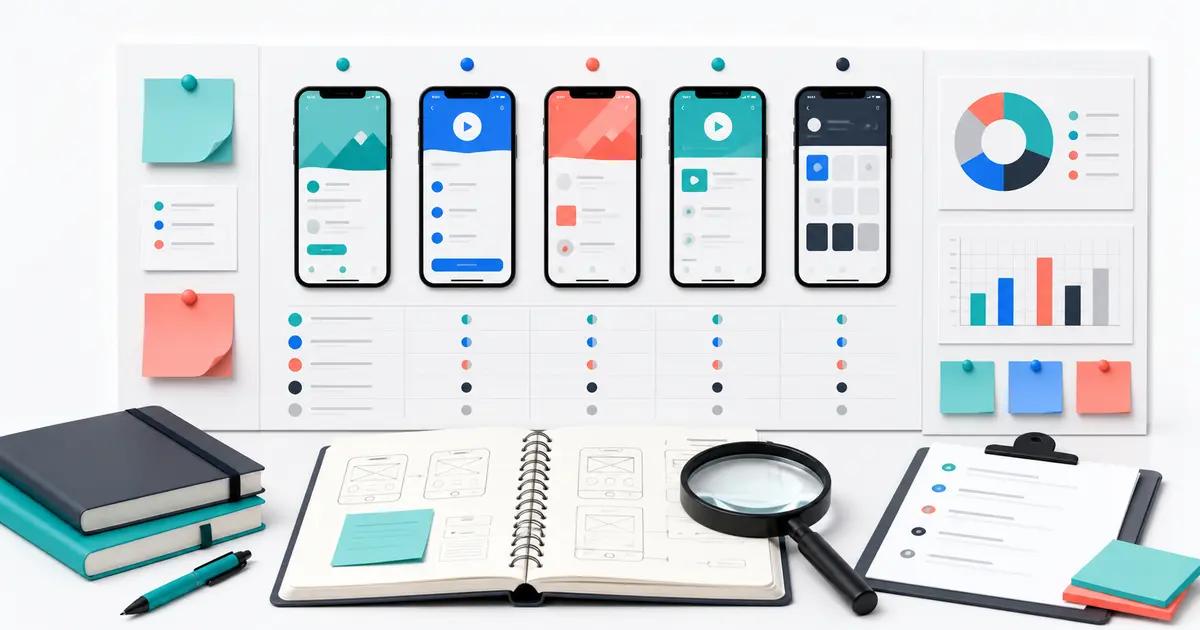
Published Oct 20, 20265 min read
By AppStoreStatistics Editorial TeamReviewed by Tobias Krenn on Aug 22, 2026
How to Choose an App Store Category for Your iOS App editorial guide
In this guide

The central idea: Choose primary and secondary categories based on the product's core job, user expectation and competitive context rather than trying to game rankings.

Key facts

  • Apple says 70% of App Store visitors use search to discover apps and almost 65% of downloads happen directly after a search; that discovery context matters for “how to choose an app category for your ios app.”

Primary references checked for “how to choose an app category for your ios app” include Apple App Store Search, Apple Ads — App Store discovery/search statistics, Apple App Store ecosystem 2025 report.

Category should reinforce what the app already is

Choose the category a reasonable user would expect after using the core feature. If an app's main job is budgeting, choosing a distant category because it looks less competitive creates a relevance mismatch and can confuse both users and analysis.

Category can affect where the app appears in browse/chart contexts and is one of the relevance inputs Apple references for search. That makes accuracy more—not less—important.

Use category analysis to understand the competitive neighborhood, then use metadata and creative to differentiate within that neighborhood.

Step-by-step: How to Choose an App Store Category for Your iOS App

1. Category choice should match actual function.

Use the category that best matches the primary job. Then inspect the apps users will see around yours so you understand the visual and credibility bar. Category selection is context, not a substitute for relevant metadata.

2. Primary category influences how users contextualize the app.

Use the category that best matches the primary job. Then inspect the apps users will see around yours so you understand the visual and credibility bar. Category selection is context, not a substitute for relevant metadata.

3. Keyword strategy should not rely on category-name stuffing.

For “how to choose an app category for your ios app,” use the U.S. storefront consistently and save the exact query, date and result set. Relevance is the first filter; after that, compare brand strength, ratings and result quality to judge whether the term is realistically contestable.

4. Revisit category only when the product meaningfully changes.

Use the category that best matches the primary job. Then inspect the apps users will see around yours so you understand the visual and credibility bar. Category selection is context, not a substitute for relevant metadata.

What to measure

Metric / evidenceQuestion it answers
Functional fitDoes the category match the core job?
Competitive contextWhich apps dominate the category?
Browse relevanceWould a browsing user expect the app here?

Common mistakes

  • Choosing a category only for perceived ranking benefit. Confirm the bottleneck with a relevant baseline before acting.
  • Using an inaccurate category. Confirm the bottleneck with a relevant baseline before acting.
  • Ignoring how competitors are grouped. Confirm the bottleneck with a relevant baseline before acting.
  • Changing categories too often. Confirm the bottleneck with a relevant baseline before acting.

Execution plan

PhaseAction
DefineWrite the app's primary user job in one sentence.
CompareInspect plausible categories and their leading apps.
ChooseSelect the most accurate primary category.
MonitorRevisit only if the product's core function changes.

Frequently asked questions

Can App Store data prove an idea will succeed?

No. It can reduce uncertainty by showing competition, search behavior proxies, reviews and category patterns, but product quality, pricing, retention and execution still matter.

What should I research first?

Start with the exact user problem, then examine the apps and search terms that already serve that problem in the U.S. storefront.

How many competitors should I analyze?

At least several direct and adjacent alternatives. A single category leader is not representative of the market a new indie app must beat.

Should I trust estimated downloads or revenue as exact numbers?

No. Treat third-party estimates as modeled signals unless they come from your own authorized App Store Connect data. AppStoreStatistics explicitly labels modeled values rather than presenting them as official Apple figures.

Sources and review standard

Platform-specific claims are linked to primary documentation where available. AppStoreStatistics public data is observed or modeled as labeled; it is not private App Store Connect data.

Read methodology