✦ Pricing

Validation and Research

How to Find Low-Competition App Ideas for iOS

A strong iOS niche combines demand, realistic competition, monetization fit, retention potential and a distribution path you can execute.
Published Oct 7, 20265 min read
By AppStoreStatistics Editorial TeamReviewed by Tobias Krenn on Aug 22, 2026
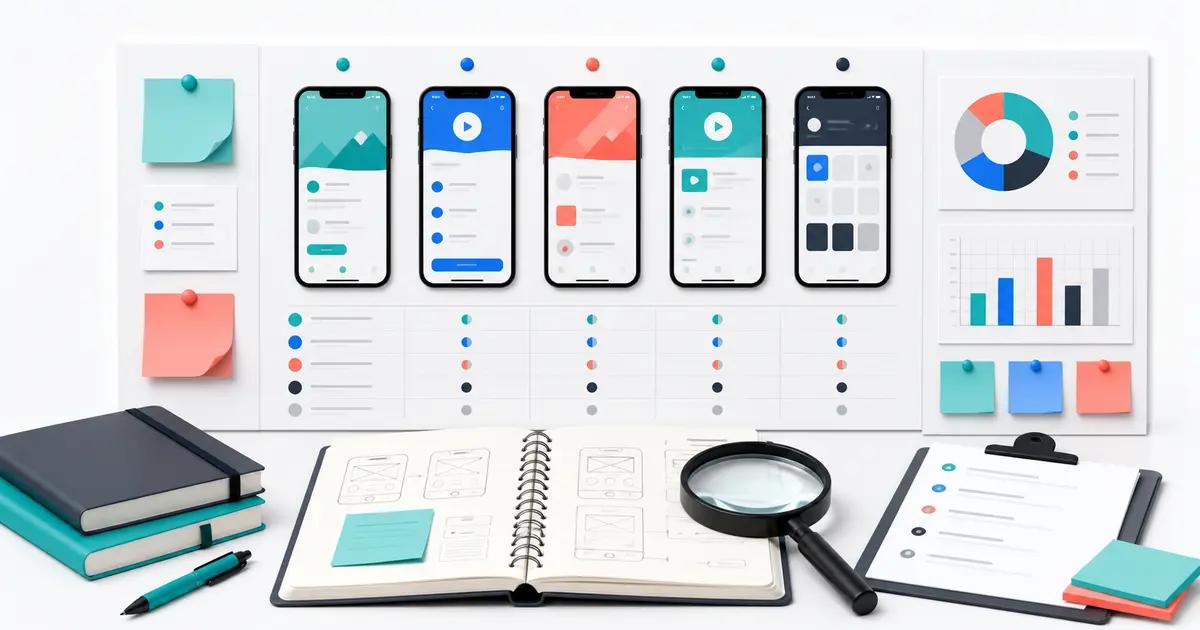
How to Find Low-Competition App Ideas for iOS editorial guide
In this guide

The central idea: Look for narrow problem-language, weak incumbent experiences, fragmented keyword results and underserved audiences instead of chasing broad trending categories.

Key facts

  • Apple says 70% of App Store visitors use search to discover apps and almost 65% of downloads happen directly after a search; that discovery context matters for “how to find low competition app ideas.”
  • Apple reported 850+ million average weekly App Store users across 175 countries and regions in 2025, making distribution large but competition equally real.

Primary references checked for “how to find low competition app ideas” include Apple App Store Search, Apple Ads — App Store discovery/search statistics, Apple App Store ecosystem 2025 report.

Score niches on five dimensions

Use a simple 1–5 score for demand evidence, competition reachability, monetization fit, retention potential and distribution advantage. A niche with 5/5 demand but 1/5 reachability may be worse for an indie developer than a smaller market where you can actually rank and convert.

Look for asymmetry. Maybe incumbents have huge brands but outdated UX. Maybe the broad category is crowded but a specific profession or workflow is underserved. Maybe English competition is high while a supported localization has weaker results.

Do not confuse “few competitors” with opportunity. Sometimes few competitors means few users care.

Step-by-step: How to Find Low-Competition App Ideas for iOS

1. Long-tail search terms can reveal underserved jobs-to-be-done.

For “how to find low competition app ideas,” use the U.S. storefront consistently and save the exact query, date and result set. Relevance is the first filter; after that, compare brand strength, ratings and result quality to judge whether the term is realistically contestable.

2. Weak screenshot quality among incumbents can be an opportunity.

When working on “how to find low competition app ideas,” treat the listing as part of the product funnel. The promise in the title/subtitle and first screenshots should match the first-use experience. A higher rank for a mismatched promise can actually create worse conversion and retention.

3. Recent review complaints may reveal product gaps.

For this niche workflow, reproduce the flow from a clean install with no developer-only assumptions. If a reviewer needs a credential, special state or explanation, provide it directly in App Review Information and verify that the credential still works.

4. Avoid niches that depend on trademarks or copied positioning.

Evaluate the revenue model together with acquisition and retention. A niche can have high willingness to pay but still be unattractive if users are impossible to reach organically or the need occurs only once.

What to measure

Metric / evidenceQuestion it answers
Demand evidenceAre users searching, reviewing and paying?
Competition pressureCan a smaller app plausibly surface?
Retention needIs the job recurring enough to sustain usage?

Common mistakes

  • Chasing trending categories after they become crowded. Confirm the bottleneck with a relevant baseline before acting.
  • Using competitor brand names as keywords. Confirm the bottleneck with a relevant baseline before acting.
  • Choosing an idea because no app exists without asking why. Confirm the bottleneck with a relevant baseline before acting.
  • Ignoring monetization fit. Confirm the bottleneck with a relevant baseline before acting.

Execution plan

PhaseAction
Pass 1Generate narrow problem/audience combinations.
Pass 2Check U.S. result-set competition and review demand.
Pass 3Score monetization and retention.
Pass 4Select only niches with a plausible distribution wedge.

Frequently asked questions

Can App Store data prove an idea will succeed?

No. It can reduce uncertainty by showing competition, search behavior proxies, reviews and category patterns, but product quality, pricing, retention and execution still matter.

What should I research first?

Start with the exact user problem, then examine the apps and search terms that already serve that problem in the U.S. storefront.

How many competitors should I analyze?

At least several direct and adjacent alternatives. A single category leader is not representative of the market a new indie app must beat.

Should I trust estimated downloads or revenue as exact numbers?

No. Treat third-party estimates as modeled signals unless they come from your own authorized App Store Connect data. AppStoreStatistics explicitly labels modeled values rather than presenting them as official Apple figures.

Sources and review standard

Platform-specific claims are linked to primary documentation where available. AppStoreStatistics public data is observed or modeled as labeled; it is not private App Store Connect data.

Read methodology