✦ Pricing

Discovery and Performance Diagnosis

How to Improve App Store Impressions

Increase qualified impressions by expanding relevant keyword coverage, improving achievable ranks and localization while watching conversion quality.
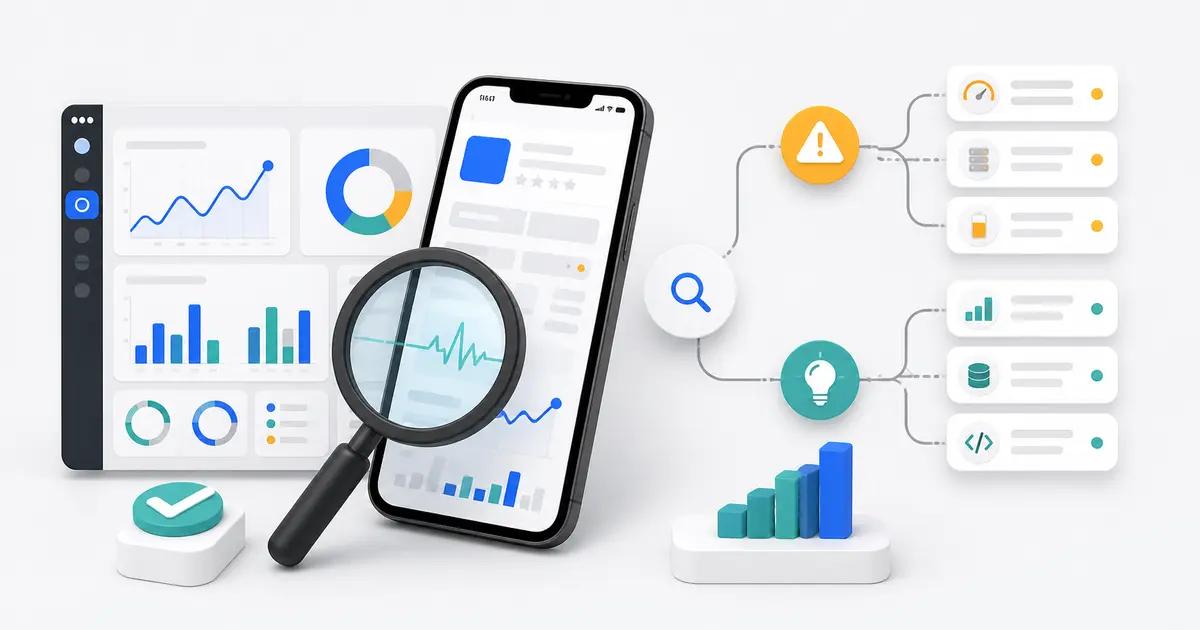
Published Oct 1, 20265 min read
By AppStoreStatistics Editorial TeamReviewed by Tobias Krenn on Aug 22, 2026
How to Improve App Store Impressions editorial guide
In this guide

The central idea: Increase impressions by improving searchable relevance and coverage, then distinguish more impressions from better-quality impressions.

Key facts

  • Apple says 70% of App Store visitors use search to discover apps and almost 65% of downloads happen directly after a search; that discovery context matters for “how to improve app store impressions.”
  • Apple says search relevance can use the app title, subtitle, keywords and primary category, alongside user behavior such as downloads, ratings and reviews.
  • The iOS keyword field is limited to 100 characters, while app names and subtitles are limited to 30 characters each.

Primary references checked for “how to improve app store impressions” include Apple App Store Search, Apple Ads — App Store discovery/search statistics, App Store Connect acquisition analytics.

More impressions should not be the only goal

Impressions are useful when they come from the right users. If you broaden metadata and impressions jump while conversion collapses, the app may be appearing for weak intent.

Segment acquisition by source and territory in App Store Connect. Compare Search impressions with conversion and first-time downloads. For keyword work, pair your own aggregate Apple analytics with observed rank tracking by query.

The best impression growth comes from expanding relevant coverage while protecting conversion.

Step-by-step: How to Improve App Store Impressions

1. More keywords are not automatically more useful impressions.

For “how to improve app store impressions,” use the U.S. storefront consistently and save the exact query, date and result set. Relevance is the first filter; after that, compare brand strength, ratings and result quality to judge whether the term is realistically contestable.

2. Expand semantic coverage around high-intent jobs.

Use this “how to improve app store impressions” step as a measurable checkpoint: record the current state, the expected outcome and the evidence you will review before expanding the work.

3. Improve rating/review quality through product experience.

For this impressions workflow, reproduce the flow from a clean install with no developer-only assumptions. If a reviewer needs a credential, special state or explanation, provide it directly in App Review Information and verify that the credential still works.

4. Measure App Store Search separately in App Store Connect Analytics.

For “how to improve app store impressions,” use the U.S. storefront consistently and save the exact query, date and result set. Relevance is the first filter; after that, compare brand strength, ratings and result quality to judge whether the term is realistically contestable.

What to measure

Metric / evidenceQuestion it answers
Search impressionsIs discoverability growing?
Conversion rateAre new impressions qualified?
Territory/source mixWhere did the increase come from?

Common mistakes

  • Maximizing raw impressions instead of qualified impressions. Confirm the bottleneck with a relevant baseline before acting.
  • Adding irrelevant keywords. Confirm the bottleneck with a relevant baseline before acting.
  • Ignoring source-level analytics. Confirm the bottleneck with a relevant baseline before acting.
  • Failing to connect impressions to conversion. Confirm the bottleneck with a relevant baseline before acting.

Execution plan

PhaseAction
SegmentSeparate Search/Browse and U.S. territory data.
ExpandAdd relevant semantic coverage, not filler.
ProtectWatch conversion as visibility grows.
IterateKeep only expansion that produces qualified users.

Frequently asked questions

What does Apple say affects App Store search?

Apple states that search results consider text relevance—including title, subtitle, keywords and primary category—as well as user behavior such as downloads, ratings and reviews.

How many characters can I use for iOS keywords?

Apple limits the keyword field to 100 characters. App names and subtitles are each limited to 30 characters.

Should I target the highest-volume keyword?

Not automatically. Apple itself recommends considering the trade-off between popular competitive terms and less common terms that may be easier to rank for.

Are App Store rankings the same in every country?

No. Search results are storefront-specific, so track the keyword in the exact country you care about.

Sources and review standard

Platform-specific claims are linked to primary documentation where available. AppStoreStatistics public data is observed or modeled as labeled; it is not private App Store Connect data.

Read methodology