Validation and Research

How to Research the App Store Before Building an App

Use App Store search, charts, new releases, ratings, reviews and competitor metadata as a dated market dataset before writing significant code.
Published Oct 14, 20265 min read
By AppStoreStatistics Editorial TeamReviewed by Tobias Krenn on Aug 22, 2026
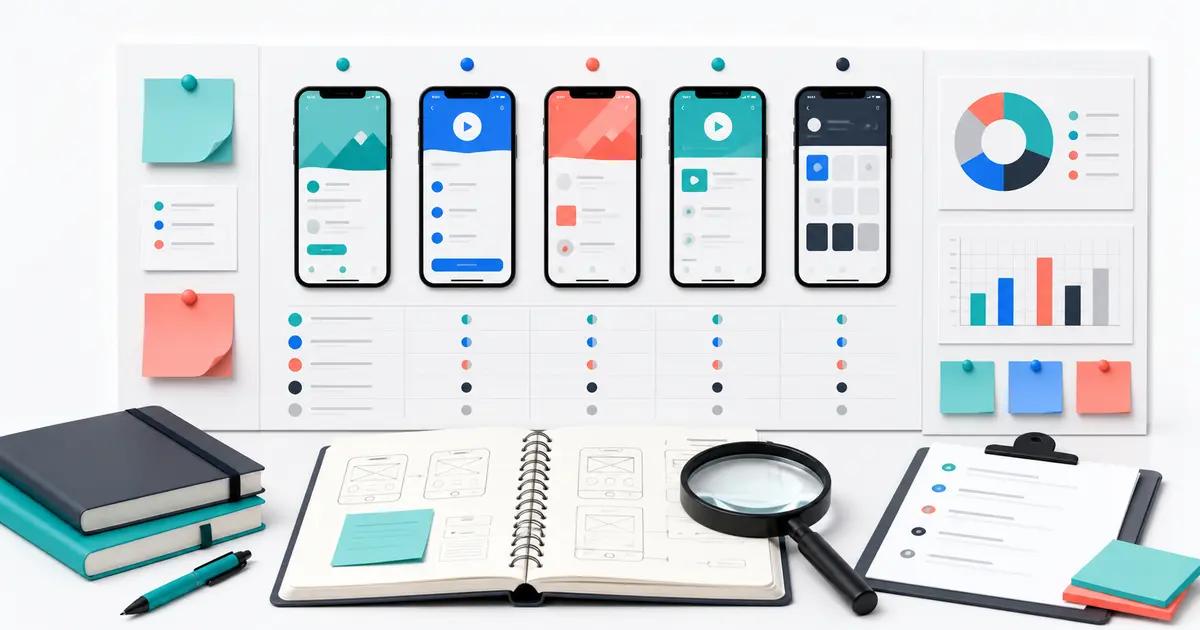
How to Research the App Store Before Building an App editorial guide
In this guide

The central idea: Use App Store search, charts, new releases, reviews, categories and keyword results as a research dataset before writing code.

Key facts

  • Apple says 70% of App Store visitors use search to discover apps and almost 65% of downloads happen directly after a search; that discovery context matters for “how to research the app store before building an app.”
  • Apple reported 850+ million average weekly App Store users across 175 countries and regions in 2025, making distribution large but competition equally real.

Primary references checked for “how to research the app store before building an app” include Apple App Store Search, Apple Ads — App Store discovery/search statistics, Apple App Store ecosystem 2025 report.

Turn the App Store into a dated research dataset

Search at least one broad term and several narrow intent phrases in the U.S. storefront. Save the top results, title/subtitle language, rating count, screenshot positioning and whether results actually satisfy the query.

Then inspect charts and new releases to understand category momentum. Read both five-star and one-to-three-star reviews. Positive reviews show what users value; negative reviews show switching triggers. Note update dates because a stagnant incumbent can create opportunity, while a rapidly iterating market may require more ongoing work.

Always date the research. Rankings, creative and competitor sets change.

Step-by-step: How to Research the App Store Before Building an App

1. Research at least one broad and five narrow keyword families.

For “how to research the app store before building an app,” use the U.S. storefront consistently and save the exact query, date and result set. Relevance is the first filter; after that, compare brand strength, ratings and result quality to judge whether the term is realistically contestable.

2. Check several competitors rather than copying the category leader.

Compare several direct alternatives, not just the market leader. Record positioning, top visible keywords, first screenshots, rating pressure, update cadence and review complaints; those signals expose both acquisition difficulty and product gaps.

3. Compare U.S. results with other storefronts if international expansion matters.

Measure the storefront separately. Search results and user expectations differ by country, and localization should include both language and positioning rather than literal translation alone.

4. Save a baseline so changes can be measured later.

Capture the baseline before making the change and annotate the release date. Without a dated before/after state, normal App Store volatility can be mistaken for the effect of your work.

What to measure

Metric / evidenceQuestion it answers
Result-set qualityDo current results satisfy the query?
Market activityAre competitors shipping and gaining reviews?
Language patternsWhich problem/outcome terms repeat?

Common mistakes

  • Researching only through Google. Confirm the bottleneck with a relevant baseline before acting.
  • Looking at one search result. Confirm the bottleneck with a relevant baseline before acting.
  • Not saving baseline screenshots/ranks. Confirm the bottleneck with a relevant baseline before acting.
  • Confusing modeled estimates with official Apple numbers. Confirm the bottleneck with a relevant baseline before acting.

Execution plan

PhaseAction
SearchMap broad + long-tail U.S. queries.
StoreInspect charts, categories and new releases.
UsersRead review themes and language.
DecisionCreate a dated opportunity/risk brief before coding.

Frequently asked questions

Can App Store data prove an idea will succeed?

No. It can reduce uncertainty by showing competition, search behavior proxies, reviews and category patterns, but product quality, pricing, retention and execution still matter.

What should I research first?

Start with the exact user problem, then examine the apps and search terms that already serve that problem in the U.S. storefront.

How many competitors should I analyze?

At least several direct and adjacent alternatives. A single category leader is not representative of the market a new indie app must beat.

Should I trust estimated downloads or revenue as exact numbers?

No. Treat third-party estimates as modeled signals unless they come from your own authorized App Store Connect data. AppStoreStatistics explicitly labels modeled values rather than presenting them as official Apple figures.

Sources and review standard

Platform-specific claims are linked to primary documentation where available. AppStoreStatistics public data is observed or modeled as labeled; it is not private App Store Connect data.

Read methodology