✦ Pricing

Discovery and Performance Diagnosis

Why Is My iOS App Not Getting Downloads? A Diagnostic Guide

Check availability first, then search visibility/impressions, then conversion and retention. Low downloads are a symptom; the funnel tells you the cause.
Published Aug 31, 20265 min read
By AppStoreStatistics Editorial TeamReviewed by Tobias Krenn on Aug 22, 2026
Why Is My iOS App Not Getting Downloads? A Diagnostic Guide editorial guide
In this guide

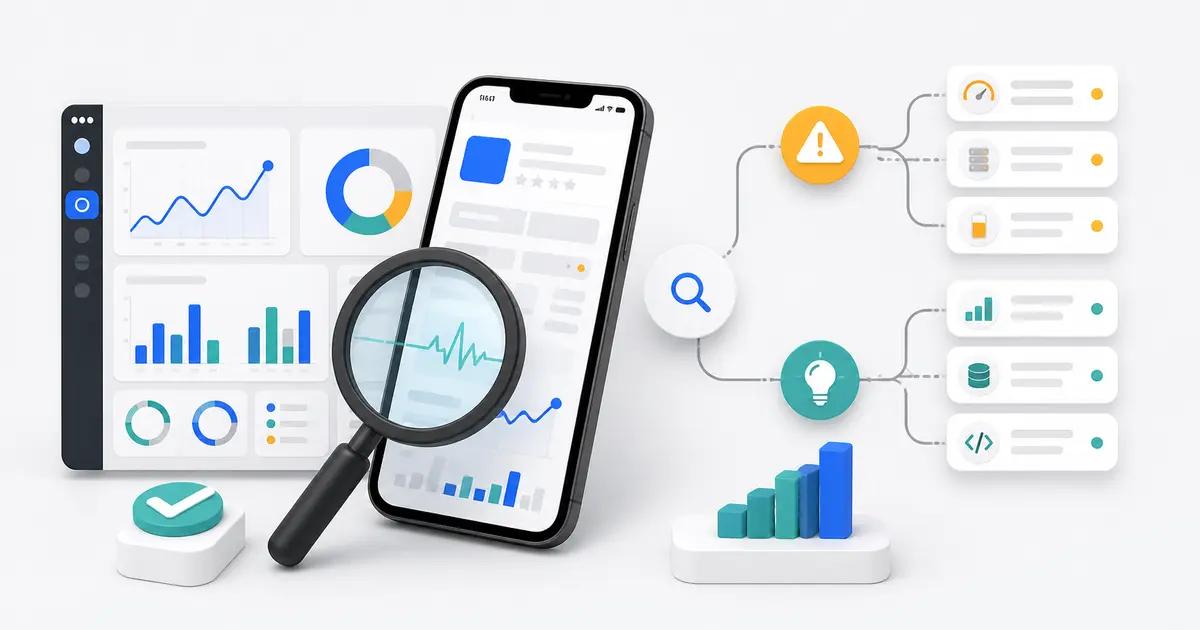
The central idea: Diagnose low downloads using a funnel: availability → impressions → product-page views → conversion → retention, instead of immediately changing the app name.

Key facts

  • Apple says 70% of App Store visitors use search to discover apps and almost 65% of downloads happen directly after a search; that discovery context matters for “why is my ios app not getting downloads.”
  • Apple says search relevance can use the app title, subtitle, keywords and primary category, alongside user behavior such as downloads, ratings and reviews.
  • The iOS keyword field is limited to 100 characters, while app names and subtitles are limited to 30 characters each.

Primary references checked for “why is my ios app not getting downloads” include Apple App Store Search, Apple Ads — App Store discovery/search statistics, App Store Connect acquisition analytics.

Diagnose in the correct order

Start with availability: is the app live in the intended storefront? Then search visibility: can it be found for the brand and relevant descriptive terms? Then impressions: is Apple showing it? Then conversion: are those impressions becoming downloads? Finally retention: are downloads becoming real users?

Each stage depends on the prior stage. Screenshot changes cannot fix an unavailable app. New keywords cannot fix a crashing onboarding flow. More content cannot fix a misleading value proposition.

Write the current numbers down before changing anything, even if the dataset is small.

Step-by-step: Why Is My iOS App Not Getting Downloads? A Diagnostic Guide

1. Confirm the app is available in the target storefront.

Measure the storefront separately. Search results and user expectations differ by country, and localization should include both language and positioning rather than literal translation alone.

2. Check whether Apple Search can find the app for branded and descriptive terms.

For “why is my ios app not getting downloads,” use the U.S. storefront consistently and save the exact query, date and result set. Relevance is the first filter; after that, compare brand strength, ratings and result quality to judge whether the term is realistically contestable.

3. Separate impressions from page-view and conversion problems.

Turn the statement into a falsifiable hypothesis. Ask what observable behavior would support it—searching, switching, joining a waitlist, completing a prototype task or paying—and what result would cause you to narrow or stop the project.

4. Compare your listing against the exact apps ranking above you.

When working on “why is my ios app not getting downloads,” treat the listing as part of the product funnel. The promise in the title/subtitle and first screenshots should match the first-use experience. A higher rank for a mismatched promise can actually create worse conversion and retention.

What to measure

Metric / evidenceQuestion it answers
AvailabilityIs the app live in the right storefront?
VisibilityDoes it receive search impressions/rank?
Conversion/retentionDo users install and stay?

Common mistakes

  • Assuming low downloads means the product itself is bad. Confirm the bottleneck with a relevant baseline before acting.
  • Assuming high impressions mean healthy discovery. Confirm the bottleneck with a relevant baseline before acting.
  • Ignoring availability/indexing. Confirm the bottleneck with a relevant baseline before acting.
  • Changing everything at once. Confirm the bottleneck with a relevant baseline before acting.

Execution plan

PhaseAction
Check 1Availability and storefront.
Check 2Brand/descriptive search visibility.
Check 3Impressions and conversion.
Check 4Retention, reviews and product quality.

Frequently asked questions

Can ASO grow an app without paid ads?

Yes, especially when users actively search for the problem the app solves. ASO is not guaranteed traffic, but it can improve qualified discoverability and conversion without buying each install.

What matters more: rankings or conversion?

Both. A high rank with a weak listing wastes impressions, while a great listing with no visibility has too few opportunities to convert.

How long should I track an ASO change?

Long enough to separate normal ranking noise from a sustained shift. The right window depends on traffic and update cadence; avoid judging a strategic change from a few hours of data.

Does localization help organic downloads?

It can. Localized metadata and product-page assets can improve relevance and conversion in different storefronts when the product actually supports those users.

Sources and review standard

Platform-specific claims are linked to primary documentation where available. AppStoreStatistics public data is observed or modeled as labeled; it is not private App Store Connect data.

Read methodology